
The difference between any bar and a good Olympic bar is not aesthetics: it is rotation, tolerances, grip and durability, and that directly affects your technique and your progress. (IWF, n.d.).The key is to understand that there is no perfect bar for everyone, but there is a correct bar for your way of training (technical weightlifting, mixed crosstraining, general strength or a mix). (IWF, 2025).
- For weightlifting, the bar must meet clear specifications (weight, length, diameters) and the sleeve must rotate freely. (IWF, 2025).
- Bearings usually give faster/smoother rotation; Bushings tend toward more controlled rotation and durability for general use. (Strength Warehouse USA, 2025; Gym Mikolo, 2024).
- Basic maintenance (knurling brushing + cleaning + proper lubrication) maintains grip and rotation and prevents rust. (ConnectFit, 2024; Sportsmith, 2026).

What defines a good Olympic bar
“Reference” specifications
According to the technical regulations, the men's competition bar is specified with 20 kg, 220 cm in length, a sleeve of 5 cm in diameter and 41.5 cm in length, and a grip area of 2.8 cm (28 mm) in diameter. (IWF, 2025).
The women's bar is specified as 15 kg, 201 cm in length, 5 cm diameter and 32 cm long sleeve, and 2.5 cm (25 mm) diameter grip zone. (IWF, 2025).
If you are going to train weightlifting consistently, these measurements help you choose a bar that “feels” how it should feel and that does not change your gesture due to the material. (IWF, 2025).
Rotation: why “spinning well” does matter
In weightlifting, the rotation of the sleeves is designed so that the turn is fluid and predictable: the regulations themselves explicitly require it (“the sleeve must rotate freely”). (IWF, 2025).
In practice, a consistent rotation helps make changing hands and landing feel more natural, and reduces that feeling of “fighting” with the bar when the movement is fast. (Wikipedia, 2026).
Bearings vs bushings on an Olympic bar
Bearings
Systems with bearings (needle/ball bearings) are usually associated with a smoother and faster rotation, which fits well with explosive movements and quick wrist changes typical of weightlifting. (Strength Warehouse USA, 2025).
When it usually makes the most sense: If you weightlift frequently, work on technique with speed or are looking for that “live” and fluid feeling in snatch and clean & jerk. (Strength Warehouse USA, 2025).
Bushings
Bars with bushings tend to offer more controlled rotation and a very durable construction for general work and strength, with often easier maintenance. (Gym Mikolo, 2024).
When it usually makes the most sense: if your training is mixed (crosstraining) or you do a lot of general strength and value stability and resistance to intensive daily use. (Gym Mikolo, 2024).
Important: “bearings vs. bushings” is not black/white. Manufacturing quality and tolerances can make a good bushing feel better than a mediocre bearing. (Little Bloke Fitness, 2023).
How to choose an Olympic bar according to your way of training
A) If you do weightlifting (technical priority)
Look for a bar that meets reference specifications (20 kg/28 mm or 15 kg/25 mm) and with sleeves that rotate freely, because that is part of the “language” of the Olympic movement. (IWF, 2025).
Quick checklist (weightlifting):
- 20 kg / 28 mm (men) or 15 kg / 25 mm (women). (IWF, 2025).
- Sleeve that rotates freely and without “jumps”. (IWF, 2025).
- Defined and uniform knurling (no “dead” zones). (IWF, 2025).
B) If you do crosstraining (bar for everything)
Balance rules here: enough rotation for Olympics, but robustness for volume, changes of use and long sessions. Bearings or bushings can work, but decide for your actual mix: if your Olympians are frequent and technical, prioritize more rotation; If your use is more general, prioritize durability and consistency. (Strength Warehouse USA, 2025; Gym Mikolo, 2024).
Two practical signs of a good choice in crosstraining:
- The bar feels the same on the first set and the last (consistency). (Little Bloke Fitness, 2023).
- The grip doesn't destroy you at high volume (helpful knurling, not mindless aggressive). (IWF, 2025).
C) If you use general force as a base
The rotation matters less than in pure weightlifting, but it should be smooth and functional. In this case, it is usually reasonable to prioritize feel stability, durability, and simple maintenance. (Gym Mikolo, 2024).

How to test a bar in 30 seconds
- Sleeve twist: that rotates freely, without strange noises or “hard” points. (IWF, 2025).
- Clearance: that there is no exaggerated lateral play in the sleeve. (Little Bloke Fitness, 2023).
- Knurling: uniform, without unexpected smooth sections and with a consistent feel for your use. (IWF, 2025).
Olympic bar maintenance
The #1 enemy of the bar in gyms with real use is a mixture of magnesium + dirt + moisture, which becomes embedded in the knurling, retains moisture and accelerates oxidation if not cleaned frequently. (Origin Fitness, 2023).
Recommended basic routine:
- After use: dry cloth to remove sweat/moisture. (Sportsmith, 2026).
- Weekly: bristle brush (nylon) to remove chalk from the knurling. (Sportsmith, 2026).
- Lubrication: use suitable oils; avoid WD-40 type sprays inside sleeves (there are guides that advise against it and recommend specific oils and small doses). (ConnectFit, 2024).
With this, you not only extend the life: you keep the bar consistent, which is what most influences how your technique feels day to day. (Sportsmith, 2026).
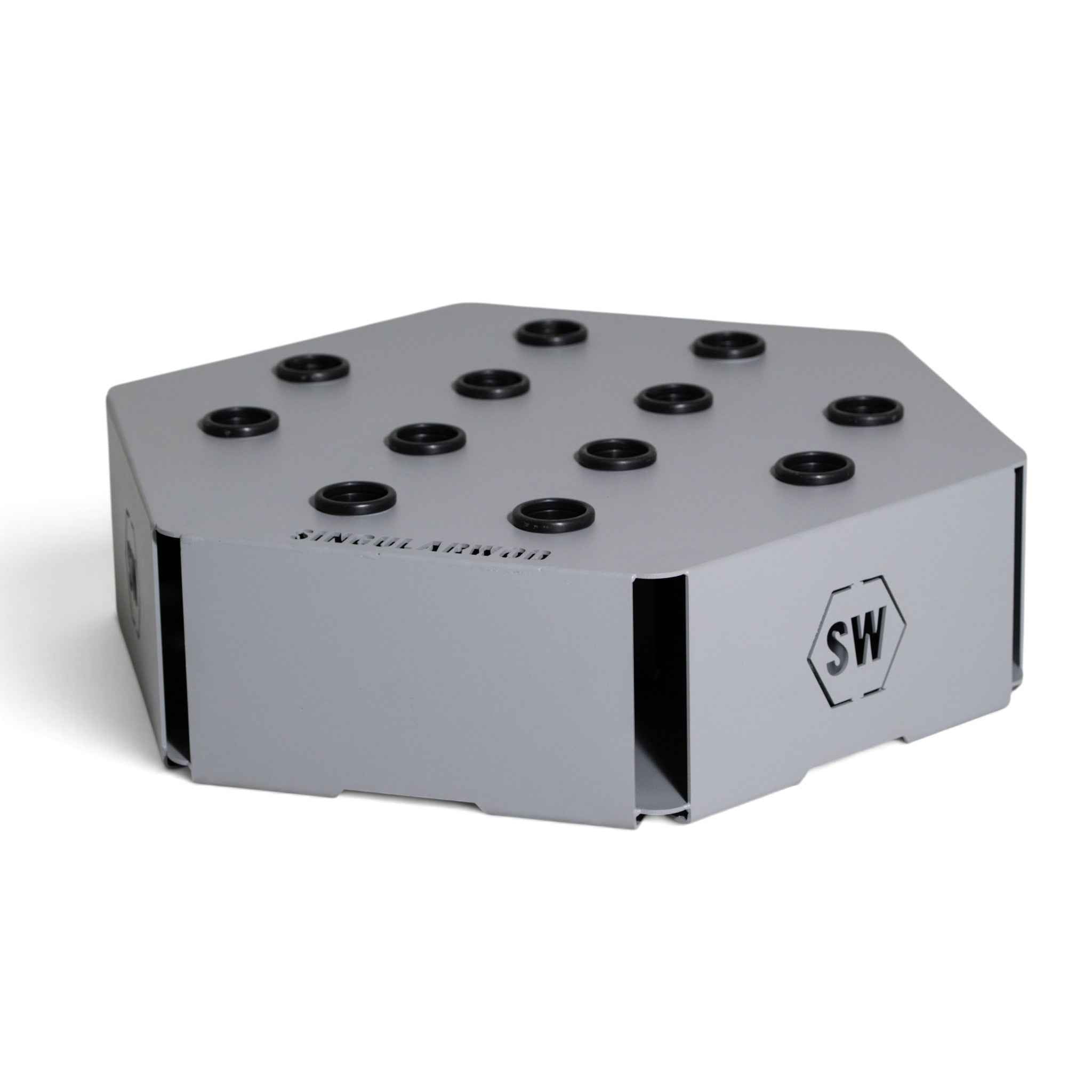
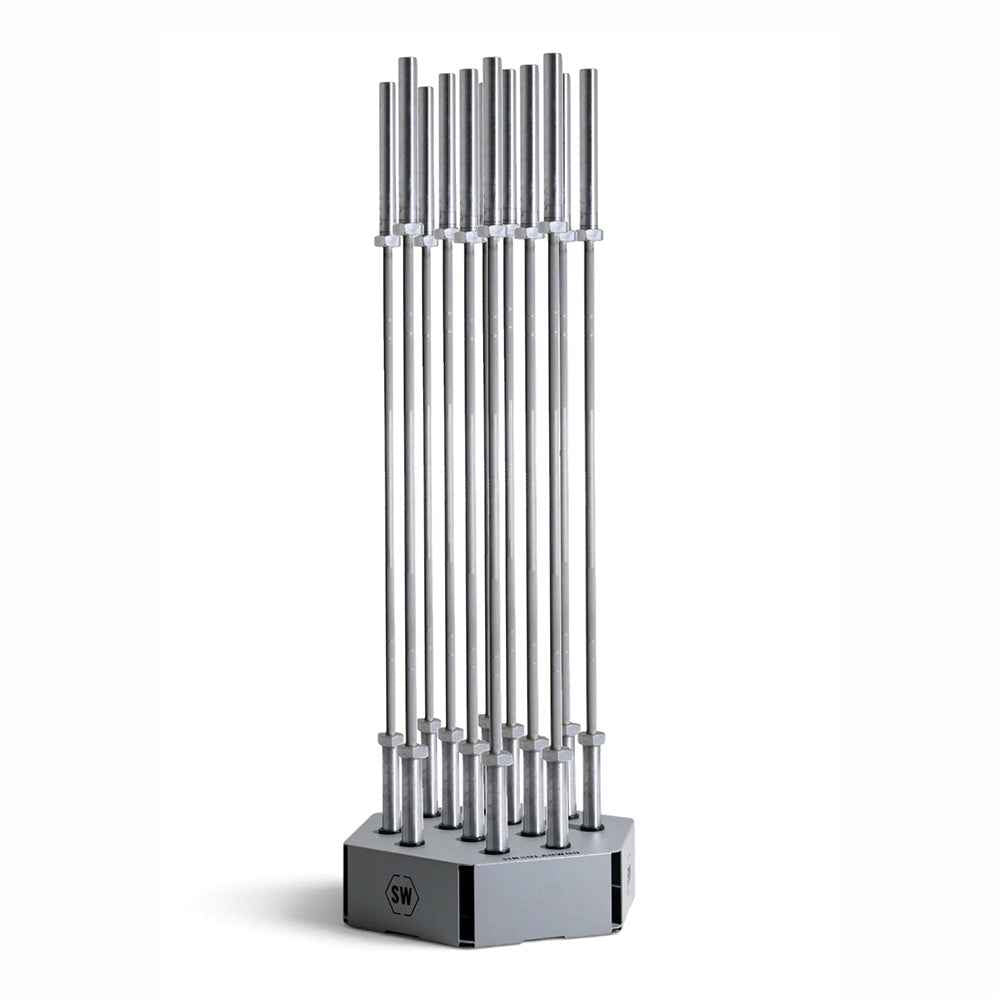
Our weightlifting collection in SINGULARWOD
If you are looking for specific material for weightlifting, in SINGULARWOD We have a line designed to accompany different levels and forms of training. From Olympic bars to bumper plates and accessories, each element is designed to offer a consistent, reliable user experience adapted to the demands of lifting.
A good technique needs a material that responds well from the first repetition. For this reason, our weightlifting line is aimed at those who value rotation, grip, durability and the real feeling of work in each session.
Explore the products in our weightlifting line:
Choosing a good bar is important. Training with a complete and coherent line makes the whole team work better.

Conclusion
A good Olympic bar is one that fits your way of training and maintains its behavior: correct measurements, consistent grip and reliable rotation. If you weightlift frequently, stick to the standard (20kg/28mm or 15kg/25mm) and require sleeves that rotate freely. (IWF, 2025).
And if you already have a good bar, take care of it: cleaning the knurling and controlling humidity is not a detail, it is what makes the bar continue to “spin like the first day” in 12 months. (Origin Fitness, 2023; Sportsmith, 2026).