
In cross-training, it's easy to fall into two extremes: using nothing and ending up "paying" for it with skin or joint injuries, or using everything and depending on it to train. The key lies in a simple idea: smart protection = using accessories to maintain quality of movement and continuity, not to obstruct technique or force a volume that your body cannot yet handle. (Soligard et al., 2016).
Accessories work best when they address a specific problem (friction, impact, stability, high point load). If you use them "out of habit," they can create a false sense of security or even add friction, stiffness, or dependence. (Soligard et al., 2016)
Calluses and tape primarily protect against friction : useful for high volume bar/ring workouts, but they do not replace a stable grip or the maintenance of calluses. (MedlinePlus, 2025).
Knee braces often provide warmth and compression and may improve proprioception in some contexts, but the evidence is not uniform and they should not "cover up" relevant pain. (Sharif et al., 2017).
The belt can help during high-intensity exertion (feeling of support/brace), but the evidence regarding "extra protection" in healthy individuals is inconclusive and it can give a false sense of security if used as a crutch. (McGill, 2007).

1) An important rule: accessories to maintain quality, not to withstand more
If an accessory helps you maintain posture, control, and clean reps in the right context, great. If you use it to push more load or more volume when your technique is breaking down, you're buying yourself a bigger problem later. (Soligard et al., 2016).
A helpful way to view it: first capacity, then accessory. Capacity = minimum mobility, basic control, and progressive tissue tolerance. Accessory = occasional assistance when the stimulus warrants it. (Soligard et al., 2016).
2) Calluses: when to use them and when not to.
Grips have a clear purpose: to reduce direct friction between skin and the bar/rings, especially during sessions with many pull-ups, toes-to-bar, or ring work. If your skin tears easily, they are often a reasonable tool for maintaining consistency. (MedlinePlus, 2025).
When to use them
-
Blocks with high gymnastic volume (many repetitions, a lot of rotation).
-
Days when you already have sensitive skin and want to prevent the "hot spot" from turning into a breakout. (MedlinePlus, 2025).
When not (or with caution)
-
If when you put them on you lose control of the bar (your hand "dances" and you tighten it again).
-
If you rely on them even for short sets: it is usually a sign of high callus, unstable grip, or excessive friction due to technique/volume. (MedlinePlus, 2025).
Practical tip
A callus shouldn't be a "mountain." Calluses form from repeated friction/pressure, and if they grow too large, they can catch and split more easily. Keeping them flat is real prevention. (MedlinePlus, 2025).
3) Tape: the most useful tool and the most misused
Tape works well when used for a specific purpose: covering a hot spot, protecting an area that's already been touched, or minimizing rope/bar friction during a specific move. The idea isn't to "cover the whole hand"; it's to protect the spot that's causing the problem. (Gymnastics Medicine, 2024).
Golden rule of taping: if it moves, it gets worse. If the tape "walks" during the session, it creates more friction and becomes like sandpaper. In that case, it's best to redo it or change strategy. (Gymnastics Medicine, 2024).
If there is already a break
Clean with soap and water, keep the area covered, and let it heal undisturbed; reopening it every two days prolongs the process. (Gymnastics Medicine, 2024).

4) Knee pads: warmth, sensation and joint control
Neoprene knee braces typically provide warmth, compression, and a feeling of stability. A review shows improvements in the Joint control in healthy knees and some functional benefits in different populations, but homogeneity and rigor are lacking to generalize effects. (Sharif et al., 2017).
When to use them
-
On days of squats or lifts, when you notice that you "warm up better" and maintain a stable feeling.
-
In volume blocks where you want to maintain consistency and avoid mild discomfort from cold/stiffness. (Sharif et al., 2017).
When not
-
If there is sharp pain, swelling, or a real feeling of instability: that is not solved with a knee brace; it is evaluated and adjusted. (Sharif et al., 2017).
Practical recommendation
Use them as a "feel-ready aid," not as an excuse to load or jump higher when your technique is already falling apart. (Sharif et al., 2017).
5) Belt: useful for high-intensity efforts, a bad idea as a habit
The belt can help create intra-abdominal pressure (brace) and provide a feeling of support during high-intensity efforts, but evidence on widespread protective benefits in healthy populations is limited, and it can generate a false sense of confidence if used to mask poor technique or to push uncontrolled loads. (McGill, 2007).
When to use it
-
Heavy sets close to your maximum or top sets where your technique is already solid and you know how to actively swing your arms. (McGill, 2007).
When not
-
Throughout the entire "normal" volume of the session.
-
To compensate for mobility, lumbopelvic control, or weak technique. (McGill, 2007).
80/20 Rule of thumb
80% of the work without a belt (actual baseline). 20% with a belt (peak intensity). (McGill, 2007).

6) Wristbands: stability yes, “more grip” not always
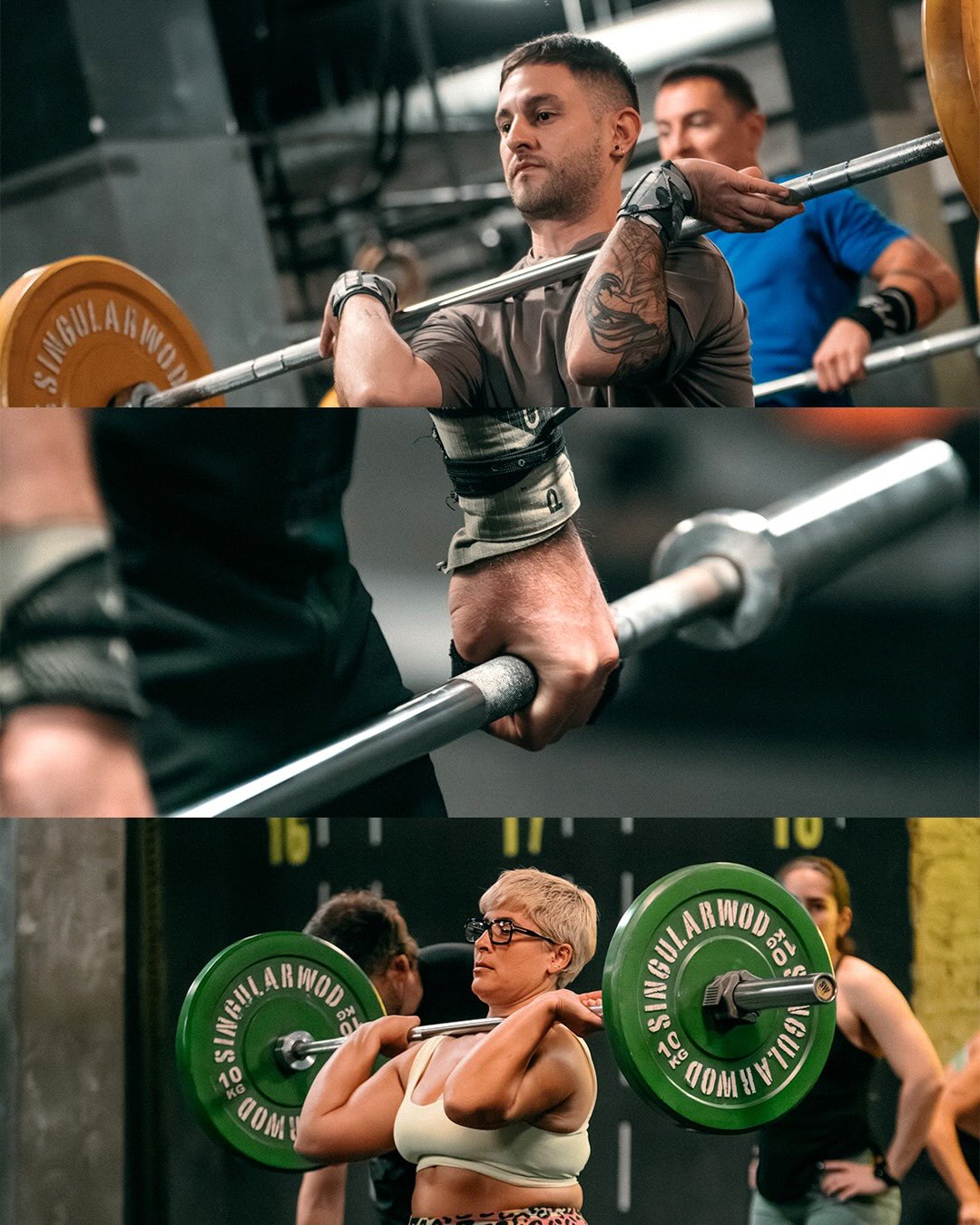
Wrist wraps can provide stability in demanding positions (e.g., wrist extension under load), but in a trial with practitioners of this discipline, no improvements in maximum strength or dynamic grip strength were observed from using wrist wraps. (Takemura et al., 2023).
When yes
-
If your wrist feels unstable in certain positions and you need stability to maintain good posture without pain. (Takemura et al., 2023).
When not
-
If you use it to "force" range or skip the wrist adaptation progression. (Takemura et al., 2023).
7) Clear recommendations by level
If you're just starting out
Your priority is to build skin and joint tolerance and learn basic patterns. Start small, and use accessories only when the stimulus calls for it (high volume, hot spot, heavy day). (Soligard et al., 2016).
Starter kit (minimum and logical)
-
Calluses: only on high-volume barbell/ring workout days. (MedlinePlus, 2025).
-
Tape: for hot spots or tears, not as a daily routine. (Gymnastics Medicine, 2024).
-
Knee pads: they can help you warm up, but never to cover up pain. (Sharif et al., 2017).
-
Belt: only when you already have technique and do really heavy sets. (McGill, 2007).
If you already train regularly
The goal here is to manage workload and maintain quality week after week. Use accessories as a tool for peak volume/intensity, and make sure you can train "well" without them as well. (Soligard et al., 2016).
A good sign of maturity is that the accessory doesn't change your movement: it only reduces friction or improves the feeling of stability when the day demands it. (McGill, 2007).
Conclusion
Accessories are not “good” or “bad”: they are context. If they help you maintain technique, comfort, and continuity, they are a smart investment. If they allow you to ignore signals (pain, friction, technical fatigue), they become a burden. (Soligard et al., 2016).
The right decision is usually simple: use them when the stimulus increases (high volume, heavy sets, sensitive skin) and reduce dependence when the stimulus decreases, so that your actual base continues to grow. (McGill, 2007).