
If you have stopped or trained “in fits and starts”, it is easy to think that you have thrown everything overboard. But you usually haven't lost your level: you've lost routine, tolerance for volume, and some sense of control.
The smart turn is not based on “pressing harder”, but on following the order that CrossStraining repeats over and over again: mechanics → consistency → intensity. It is a roadmap to train sustainably and reduce the risk of injury. (CrossFit, 2020)
This blog teaches you how to return to CrossTraining training, how to resume training after vacation, and how to prevent injuries in functional training with micro-goals (really) and an easy-to-apply progression.

Discipline microgoal:
Discipline is not a perfect day: it is a weekly minimum that, no matter what happens, is met.
CrossFit talks a lot about “training mindset”: training is focusing on the process, sustaining the practice and respecting the order of mechanics/consistency/intensity. (Rochet, 2025)
Your base has to be:
· 2 fixed days per week (non-negotiable minimum).
· If you do 3 or 4, great. But your plan must work with 2.
Rule: Never “make up” for a bad week by having a wild week. Compensating like this is usually the short way to discomfort.
The golden rule:
In crosstraining there are 3 levers:
1. Volume (how much work do you do)
2. Intensity (how hard you go)
3. Complexity/impact (jumps, kipping, technical loads, etc.)
· Raise 1 lever per week.
· Don't increase volume + intensity + complexity at the same time.
This fits with the evidence on loading: when you “suddenly” increase your acute load compared to what you have been tolerating, the risk of injury increases. (Gabbett, 2020).

4-week microplan (simple) to start or return without injury:
Week 1
Objective: 2–3 sessions, leave wanting to come back tomorrow.
· Strength: technique + moderate loads
· Metcon: 8–12 min, sustainable
· Avoid the “dangerous” combo: many reps + high load + impact the same day
CrossTraining insists on building mechanics and consistency first before increasing intensity. (CrossFit, 2020)
Week 2
Objective: +10–20% volume (only ONE thing)
· one more round, or
· one more series, or
· 2–3 more minutes
Week 3
Objective: 1–2 days of “serious” strength, without seeking maximums.
A widely used guide on strength (ACSM) recommends increasing the load in small increments (2–10%) when you can do the work with margin.(American College of Sports Medicine, 2009)
Week 4
Objective: 1 really intense session (only 1), the rest moderate.
CrossTraining also remembers that intensity is gained when there are already criteria of mechanics and consistency, and that most of the work should not be “to death”. (CrossFit, 2020).

Do the basics very well:
A classic CrossFit concept is virtuosity: master the common “in an unusual way” (beautiful, repeatable technique). (Glassman, 2005)
Virtuosity microgoal (each session)
Pick 1 thing to do “perfect”:
· light clean reception
· squat with control
· cleaner kip (or strict if applicable)
· hollow/arch with intent
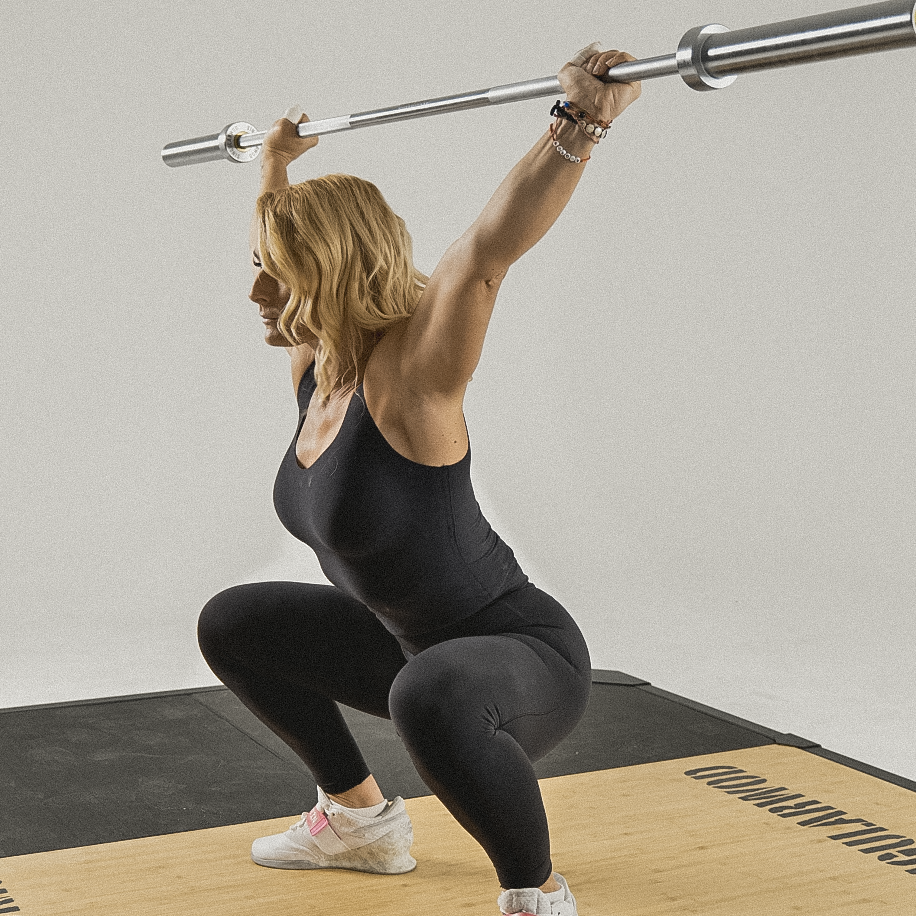
· stable overhead line
That protects your progress because your technique doesn't collapse when you pick up the pace.
Scaling done well (this is key to preventing injuries)
Training materials emphasize that scaling is adjusting load and intensity (and, when necessary, complexity) to maintain the stimulus without breaking the mechanics. (CrossFit, 2020)
3 ways to scale without “making it easy”
· Lower load and maintain the intention (same speed/tempo)
· Reduce reps so as not to lose shape
· Change movement if there is no mechanics today (for example: kipping → strict / box jump → step-ups)
Useful mobility in 8 minutes
Your goal is not to “be more flexible”: it is to strengthen what is most important
8' before training (3 days/week)
· Ankle 1–2'
· Hip 2'
· Thoracic + shoulder 3'
· Activation 1'
Microgoal: do it whenever there are squats, running or overhead.
Final checklist (to return “well”, not quickly)
If you do this, you are perfect:
· 2 fixed days/week (discipline)
· 1 lever per week (progression)
· mechanics → consistency → intensity (order) (Crossfit,2020)
· scaling without ego (quality) (Crossfit,2020)
· 8' mobility 3x/week

Conclusion:
Returning to crosstraining is not a matter of recovering everything in a week: it is a matter of recovering your discipline and your routine with a plan that you can sustain. If you are looking to resume training after vacation or even start crosstraining in January, the difference between returning well and returning injured usually lies in the same: respecting the mechanical order → consistency → intensity, increasing only one lever per week (volume, intensity or complexity) and using scaling as a tool for progress, not as a “step back”.
And if you want to do it with material designed to last and perform, SINGULARWOD It is here to accompany you: equipment designed to train with intention, progress with control and maintain consistency week after week.